We need a web app / PC application for our recent work in camera lens design. The code is available. The tool is intended for optical engineers to generate with starting points for designs. We want a visually appealing interface for it.
Physicalization offers the potential to greatly improve data accessibility. However, that access is currently limited to tactile (e.g., 3D printed objects) or sonification (e.g., using sound). This project will create a pipeline for developing interactive multimodal visualizations that represent data using both sound and physical form. The project will adapt an existing pipeline for fabricating sensing physicalizations (https://sandrabae.github.io/sensing-network/#) by automatically integrating sonification as a response to touch inputs. While the initial prototype will focus on networks, we will additionally explore other forms (e.g., spatial visualizations, line graphs, etc.) and/or how the approach influences usability (e.g., accessibility, comprehension, etc.) if time allows.
I have access to a 3D printer in the department that is capable of doing multimaterial prints, so the resources to complete the project are currently available. There are a number of directions the work can take: I'm happy to let the groups' interests inform the project direction!
The proposed project will develop a clock application for an Android cell phone that displays the local solar (Sun) time based on the location of the phone as determined by the internal GPS and the current standard time and (possibly) time zone as determined by the cellular network to which it is attached if one is available or from the GPS. In its simplest form (the minimum for the project to be successful), the app will display a text box containing:
1. A label line saying “LSoT” or “Local Solar Time”
2. A line with the time in 24 hour notation “14:32:15” where the seconds portion is
desirable, but not necessary.
3. A line giving the current position of the phone in degrees and fractions of latitude and
longitude, “31.35135, -82.44439”
A more complete form might use the full screen of the phone displaying up to 5 time boxes, one in the center and up to four more in the corners. Each box would have a label line and a time line and might contain an additional information line. Possibilities include:
Local Zone Standard Time containing the time and time zone obtained from the phone. This should include the time zone name or abbreviation which should indicate whether DST is in effect, e.g. “EST” or “EDT”
Home Zone Standard Time which is the Local Zone Standard at the location that the owner of the phone considers to be home. The primary difficulty with this case is determining whether DST is in effect at the home location.
Universal Coordinated Time which is the base reference for all zoned times. Local Solar Standard Time which is a longitude based offset from UTC that does not include the equation of time offsets that account for the tilt of the earth’s axis. This might display both a time and a signed offset in hours, minutes, and (possibly) seconds from UTC.
Zone standard times for specific zones / places which could be useful for users who need to call specific locations and need an easy to keep track of, e.g., the time in Timbuktu. Again, determining whether DST is in effect may be problematic.
The attached document contains additional information about the project including a mockup of a possible screen display and discussions of logistics and additional information resources that may be useful.
Note that I can make an android phone that should be suitable for the project available to the team.
Detail DocBookplate turns a reader's book collection into a beautiful virtual bookshelf. A working React prototype already exists so it is a validated design, 500-book test library, live cover-art API. The job would be porting it to native iOS in SwiftUI. The build touches real system frameworks: SwiftData persistence, AVFoundation barcode scanning, Vision OCR for importing books from screenshots, deep links to Kindle and Apple Books. This is a real product headed for the App Store (hopefully), so the work would ship with your name on it too.
Happy to have this be an app sometime soon
The student team will investigate, design, and build an AI-assisted code reviewer for large, complex software repositories. The system should help developers understand pull requests, identify potential issues, and consider relevant context beyond the lines directly changed. The project will emphasize useful, evidence-backed feedback and thoughtful evaluation rather than prescribing a particular AI model or implementation.
Detail DocThe proposed project, a capacity restoration game (Title TBD), would be a mobile app that is similar to a click-through video game. One important requirement is that the game needs to function without internet access, though internet can be accessed to download the app.
The Game will be initially built to serve patients of State psychiatric hospitals who have been found incapable to proceed to trial (ITP), with the potential to expand the use in jail- and outpatient-based restoration programs as well. Since the initial target audience is for an inpatient hospital setting, where patient access to the internet can be restricted, the app needs to function independently.
When someone is found incapable to proceed, it means that someone is not able to move forward with their legal case because they either didn’t know or understand the legal system, didn’t understand their own case, or couldn’t work with their attorney. Currently, there is a nationwide crisis of being able to get those found ITP admitted for treatment in a timely manner. The purpose of this app would be to gamify the legal knowledge needed to move forward with their case. The Game would be something patients could use on their own and receive real-time feedback related to their knowledge. This could potentially speed up restoration times, and lead to patients being able to get admitted to the hospital in a more timely manner. While there are a lot of systemic issues as whole surrounding the ITP process, this would be one way to improve the efficiency of the system.
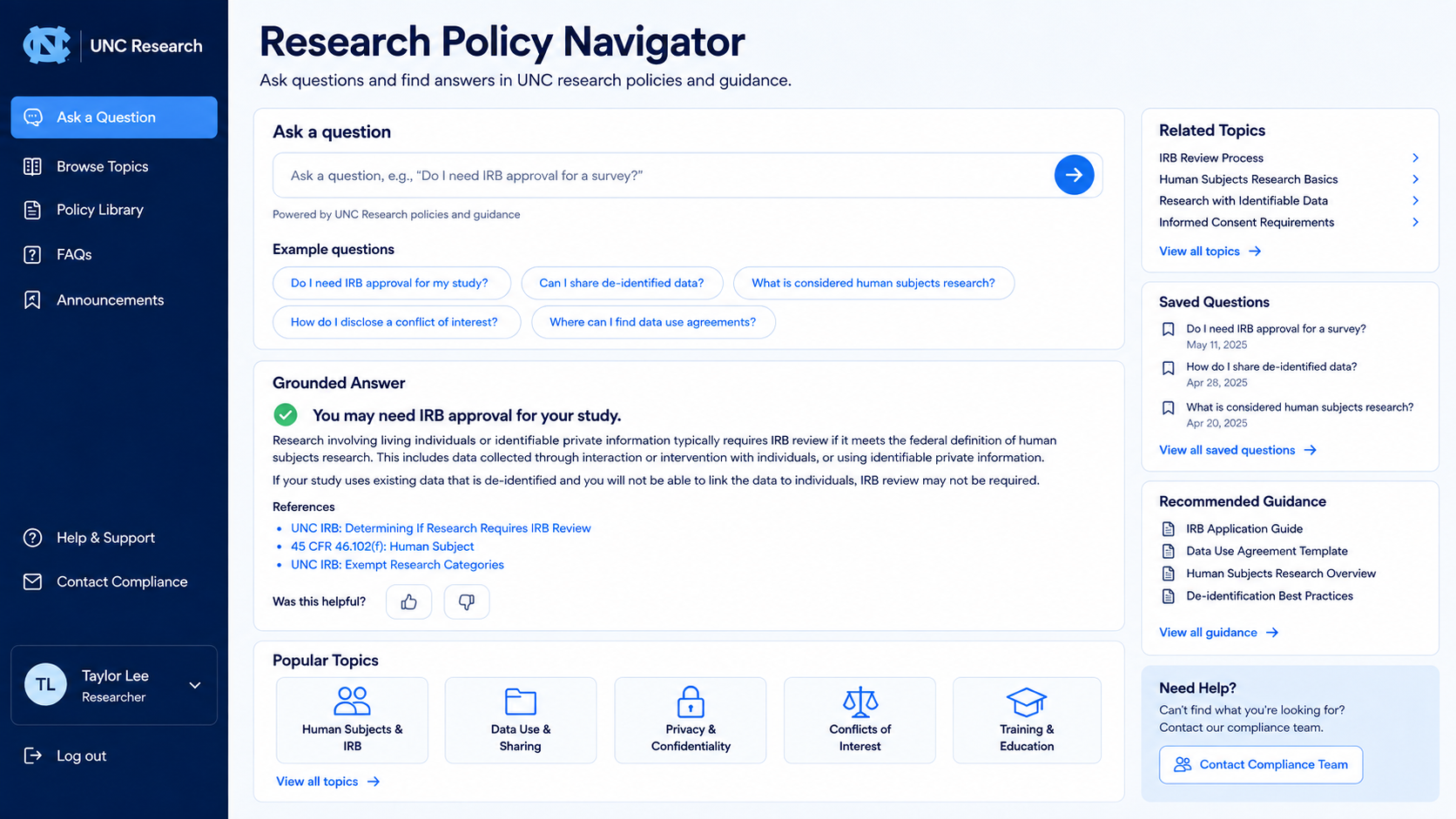
detail doc 1The **Research Policy Navigator** would be a web-based application designed to help UNC researchers quickly find, understand, and apply research-related policies and guidance. Researchers often have to search across multiple websites, policy documents, FAQs, standard operating procedures, and guidance materials to answer relatively straightforward questions. The Navigator would provide a single interface where users can ask questions in plain language, such as “Do I need IRB approval to use an existing dataset?” or “Can I share de-identified data with an external collaborator?” The application would return a concise, plain-language response grounded in approved UNC Research policies and guidance, along with citations and links to the underlying source documents. The goal is not to make regulatory or compliance determinations on behalf of university offices, but to help researchers find authoritative information more efficiently and understand when they need to contact the appropriate compliance office for a formal determination.
The primary users would be UNC faculty, staff, students, research coordinators, and others involved in conducting research. The application could initially focus on research compliance topics such as human subjects research, data use and sharing, privacy and confidentiality, conflicts of interest, research security, export control, animal care and use, and related research requirements. In addition to answering questions, the researcher-facing application could allow users to browse topics, search the policy library, view frequently asked questions, save questions or resources, receive related guidance, and provide feedback about whether an answer was helpful. Because users may ask complex questions, the system should clearly distinguish between informational guidance and decisions that must be made by an authorized university office.
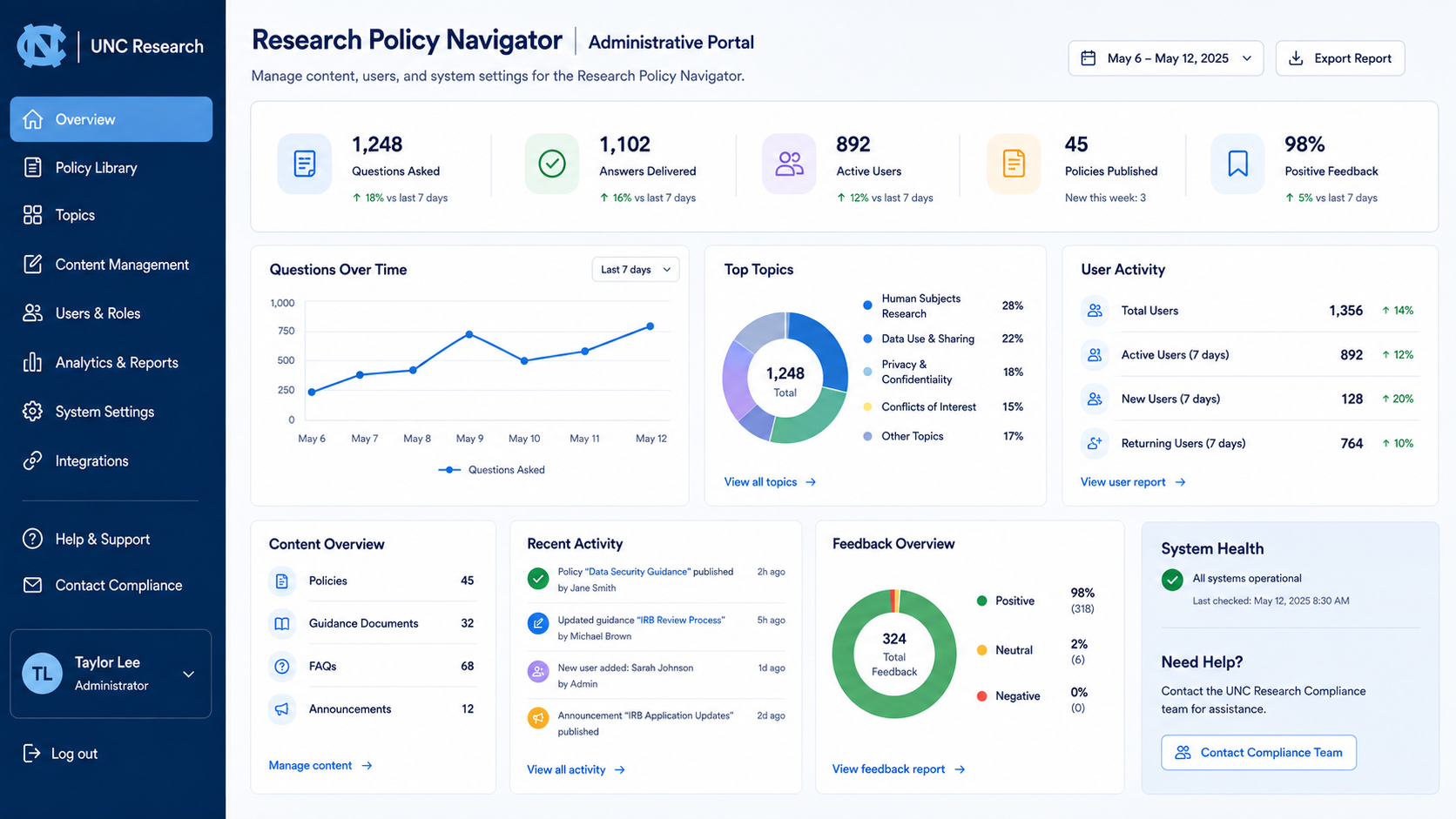
A key part of the project would be a separate **administrative portal for UNC Research staff**. Authorized administrators would use this portal to manage the content that supports the Navigator, including policies, guidance documents, FAQs, source libraries, and topic categories. The portal could also provide analytics showing the number and types of questions being asked, common topics, questions the system could not answer confidently, frequently used resources, and user feedback. These insights could help UNC Research identify areas where guidance is unclear, where new FAQs or educational materials are needed, and where researchers may be experiencing recurring compliance challenges. Administrative users should also be able to review and update source materials so that answers remain grounded in current, approved institutional information.From a technical perspective, I envision this primarily as a responsive **web application that uses UNC single sign-on**, allowing users to authenticate with their existing University credentials. The application would use role-based access so that researchers see the researcher-facing tools, while authorized UNC Research staff can access the administrative portal. The project could also include a searchable document repository and an AI-assisted question-answering component that retrieves relevant approved materials before generating a response. A major design requirement would be source transparency. Answers should identify the policies or guidance used to produce the response rather than functioning as an unrestricted chatbot. Administrators should also be able to control which documents are treated as authoritative and remove or replace outdated materials.
For the semester project, the system could use a curated collection of publicly available or otherwise approved UNC Research documents and would not require students to access confidential research records or production compliance systems. The core scope would include UNC authentication, role-based access, the researcher-facing policy question and search interface, the administrative portal, content management, and source-grounded AI responses. Direct integration with systems such as IRB, COI, or other enterprise research systems would not be required for the initial version and could be treated as a future enhancement. The project therefore offers a defined but substantial scope, with meaningful software engineering challenges involving web development, authentication, authorization, search and retrieval, AI integration, content management, analytics, usability, and responsible use of AI in a regulated environment. screen
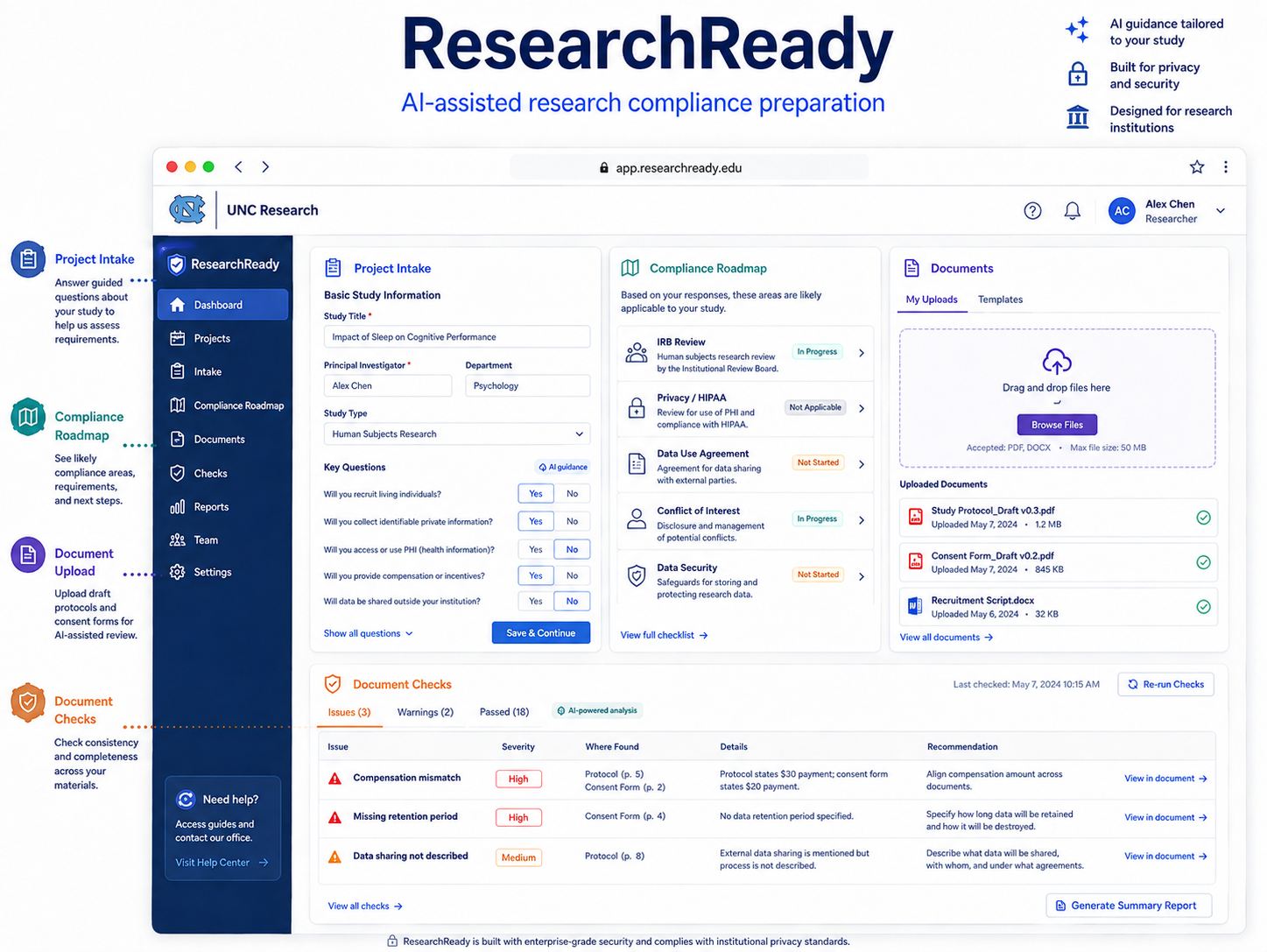
**ResearchReady** would be a web-based research compliance preparation tool designed to help UNC researchers identify which compliance areas may apply to a proposed project and understand what they should prepare before engaging with the appropriate review or support offices. The primary users would be faculty, staff, students, research coordinators, and others involved in planning research. Researchers often have to navigate requirements related to human subjects, privacy and confidentiality, HIPAA, data use and sharing, conflicts of interest, research security, animal care and use, biosafety, international activities, and other areas without always knowing which requirements apply or where to begin. ResearchReady would provide a single, guided starting point.
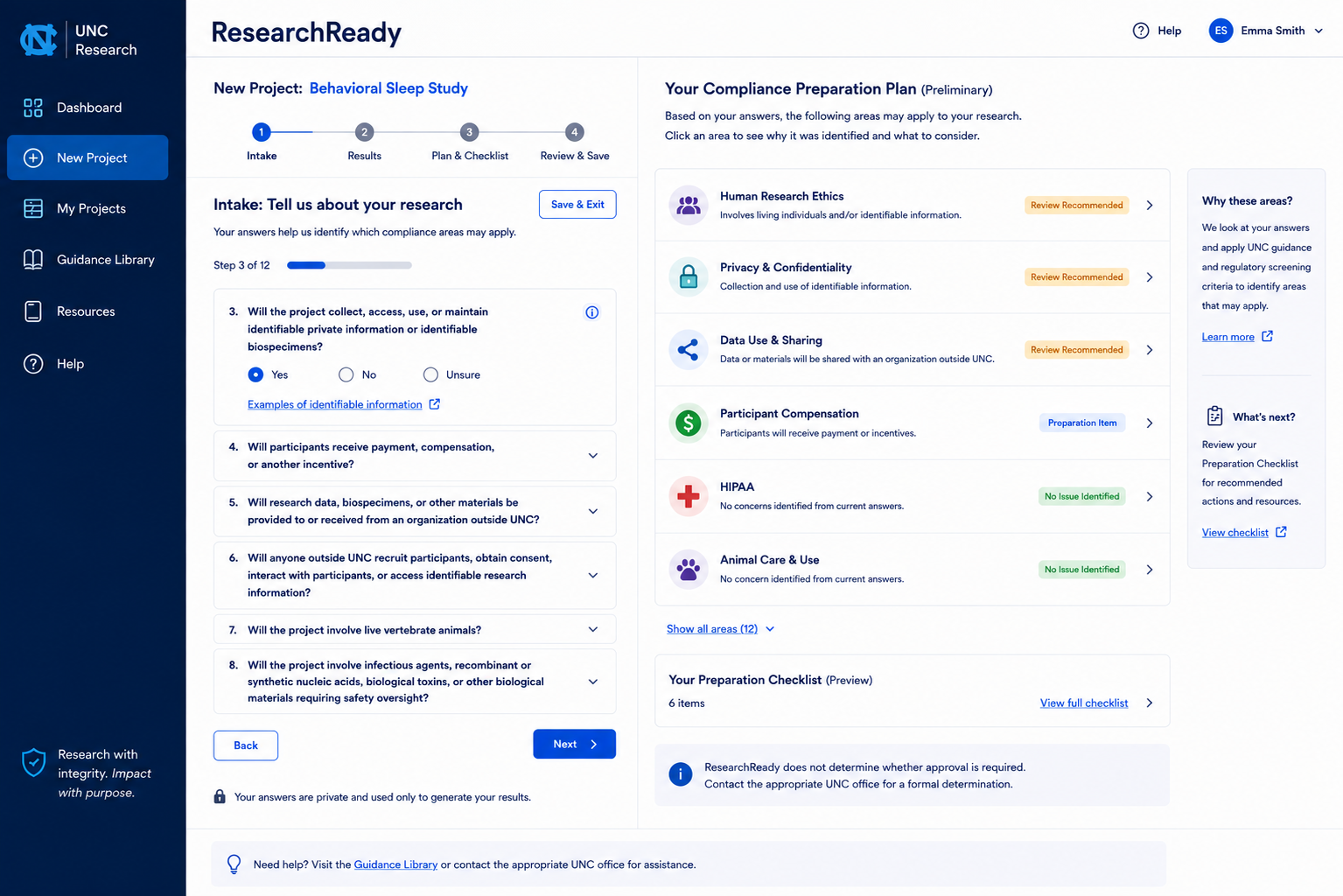
Researchers would create a project and complete a structured intake questionnaire about the **facts of the proposed research**, rather than being asked to interpret regulations themselves. Questions could address whether the project involves obtaining information or biospecimens from living individuals, identifiable private information, protected health information, participant compensation, external collaborators, data or material sharing outside UNC, vertebrate animals, biological agents or materials requiring safety oversight, international activities, or other characteristics that may trigger institutional requirements. Follow-up questions could appear based on earlier responses so that researchers only see questions relevant to their project.
Based on the researcher’s responses, ResearchReady would generate a personalized **Compliance Preparation Plan** identifying areas that may warrant further review. For each area, the system would explain why it was identified, show which study characteristics triggered it, provide links to relevant UNC Research guidance, and recommend appropriate next steps. The tool might identify areas such as Human Research Ethics, Privacy and Confidentiality, Data Use and Sharing, HIPAA, Research Security, Export Compliance, Animal Care and Use, or Biosafety. The language would be intentionally cautious, using terms such as **“Review Recommended,” “More Information Needed,”** or **“No Concern Identified from Current Responses”** rather than making formal regulatory determinations.
ResearchReady would also generate a **Preparation Checklist** tailored to the project. The checklist could prompt researchers to clarify information they will need for later review, such as what identifiable data will be collected, how data will be protected, what information or materials will be shared outside UNC, the roles of external collaborators, or which UNC office should be contacted for a formal determination. Researchers could save projects, return to them later, track their progress, and access the UNC guidance associated with each identified compliance area. ResearchReady is intended to support early planning and preparation, not to replace IRB, IACUC, privacy, biosafety, export control, or other institutional review processes.
I envision ResearchReady as a responsive **web application using UNC single sign-on**, allowing users to log in with their existing University credentials. **Role-based access would be part of the semester scope.** Researchers and research staff would be able to create and manage their own projects, complete intake questions, view Compliance Preparation Plans and checklists, and track their progress. A limited administrative role would allow designated UNC Research staff to maintain the intake questions, branching logic, compliance rules, and links to approved guidance that drive the application.
ResearchReady would complement, rather than duplicate, existing UNC tools such as Bloom. Bloom focuses on mapping and managing the operational tasks and dependencies involved in starting a clinical research study. ResearchReady would operate earlier in the planning process and across a broader range of research. Its central question would be: **“What compliance areas may apply to my proposed research, and what should I understand or prepare before I move forward?”**
For the semester project, ResearchReady could rely on publicly available or otherwise approved UNC Research guidance and would not require students to access confidential research records. The application would not need to submit information directly to production systems such as IRB, COI, IACUC, or other enterprise research platforms. Future enhancements could include connections to research administration systems, collaboration among study teams, reminders and notifications, document-based consistency checks, downloadable preparation reports, and more extensive administrative tools. This gives the student team a substantial but manageable scope involving web development, UNC authentication, role-based access, branching decision logic, data management, and user-centered design.
screenThe UNC Clinical Research Operations Co-Pilot is a proposed AI-powered chatbot designed to serve as a trusted, centralized resource for the UNC clinical research community. Embedded within the One UNC Clinical Research website, the tool would help investigators, research coordinators, trainees, and other research professionals quickly find answers to operational and regulatory questions by searching approved institutional resources, including SOPs, policies, IRB guidance, training materials, and website content.
The chatbot would provide conversational, citation-backed responses with direct links to source documents and role-specific guidance tailored to the user's needs. By reducing the time spent searching for information, improving access to current institutional guidance, and enhancing consistency in research operations, this project has the potential to support research excellence, streamline onboarding and training, and improve the overall efficiency of clinical research activities across UNC.
detail docThis project proposes the development of an AI-powered Protocol-to-Operations Assistant that can transform clinical research protocols into structured operational plans. Clinical research protocols are often lengthy and complex, requiring significant manual review to identify study procedures, visit schedules, staffing needs, safety reporting requirements, billing considerations, and other operational elements. The proposed tool would ingest a protocol PDF and automatically extract and summarize these key components to support study startup, planning, and execution.
To ensure appropriate handling of sensitive information, students would not have access to confidential institutional or sponsor-owned protocols during development. Instead, the project would use publicly available protocols obtained from sources such as ClinicalTrials.gov and other publicly accessible repositories. The application would be designed with data privacy and security as core requirements, including secure document processing and a framework that supports confidentiality if deployed in a research environment.
The tool would produce structured outputs including study visit schedules, required procedures, safety reporting obligations, equipment and resource needs, pharmacy involvement, research billing triggers, staffing estimates, and technology requirements. These outputs would provide research coordinators, project managers, and operational leaders with a concise operational roadmap derived directly from the protocol.
This capability has the potential to improve study startup efficiency, operational consistency, and resource planning. By automating the extraction of critical protocol requirements, the tool could reduce administrative burden, accelerate activation timelines, support more accurate budgeting and staffing decisions, and create a standardized approach to translating protocols into operational workflows. Over time, this project could serve as a foundation for broader AI-enabled research operations capabilities, helping research teams manage growing study portfolios more effectively while maintaining strict protections for confidential information.
detail docI would like to develop a site hosted on unc cloud apps that help students do a review of discrete math before transitioning farther into the CS major. It would essentially start out as a collection of "modules" with associated "quizzes". I can provide the educational materials, but I would love students who are interested in Educational Tech.
The project can be instrumented as needed for fill the student semester. Collect stats on longterm student performace; keep track of averages, correct rates, etc. for overall, or individual items; perhaps AI analyses of possible extensions or adaptations.
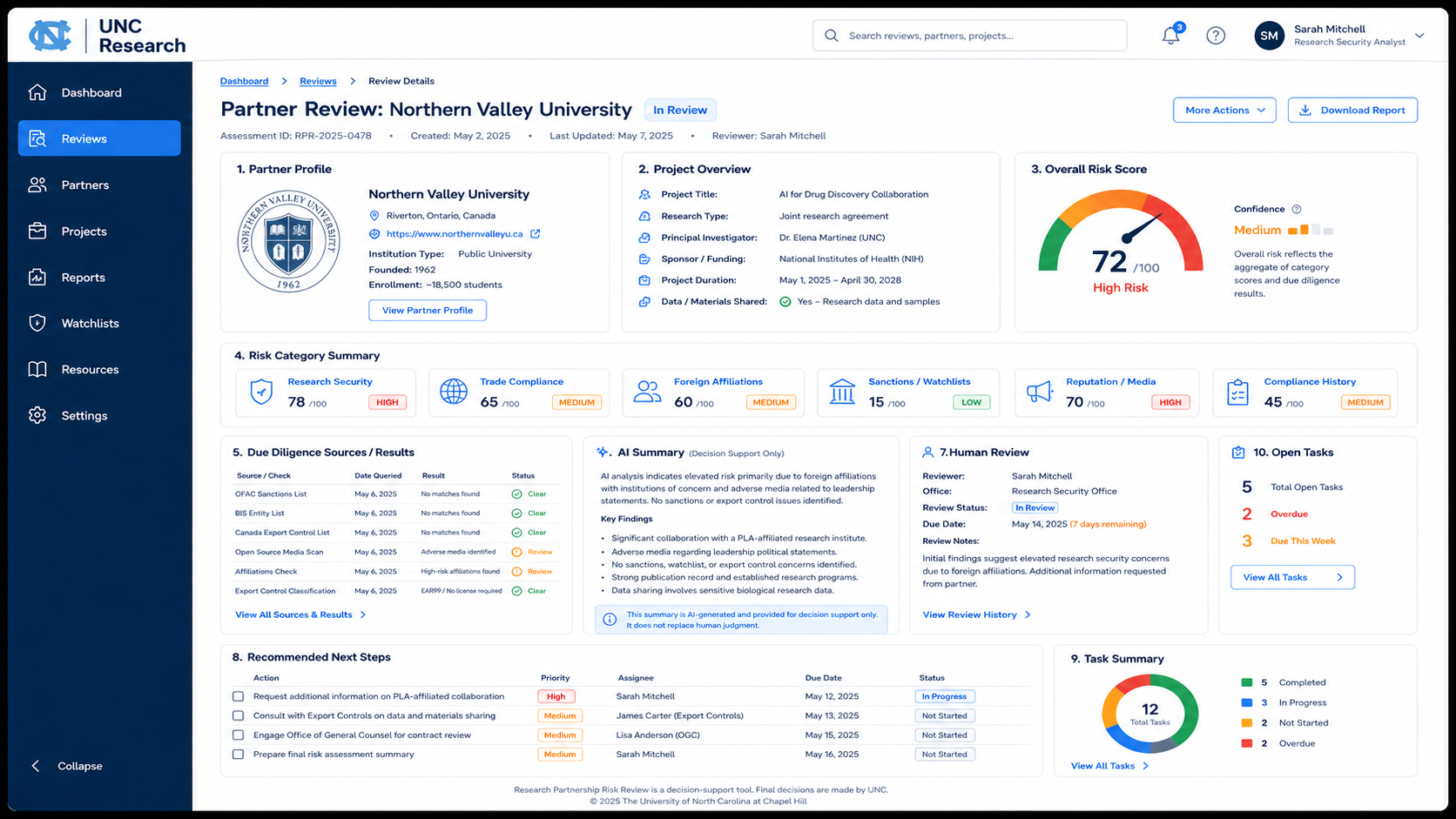
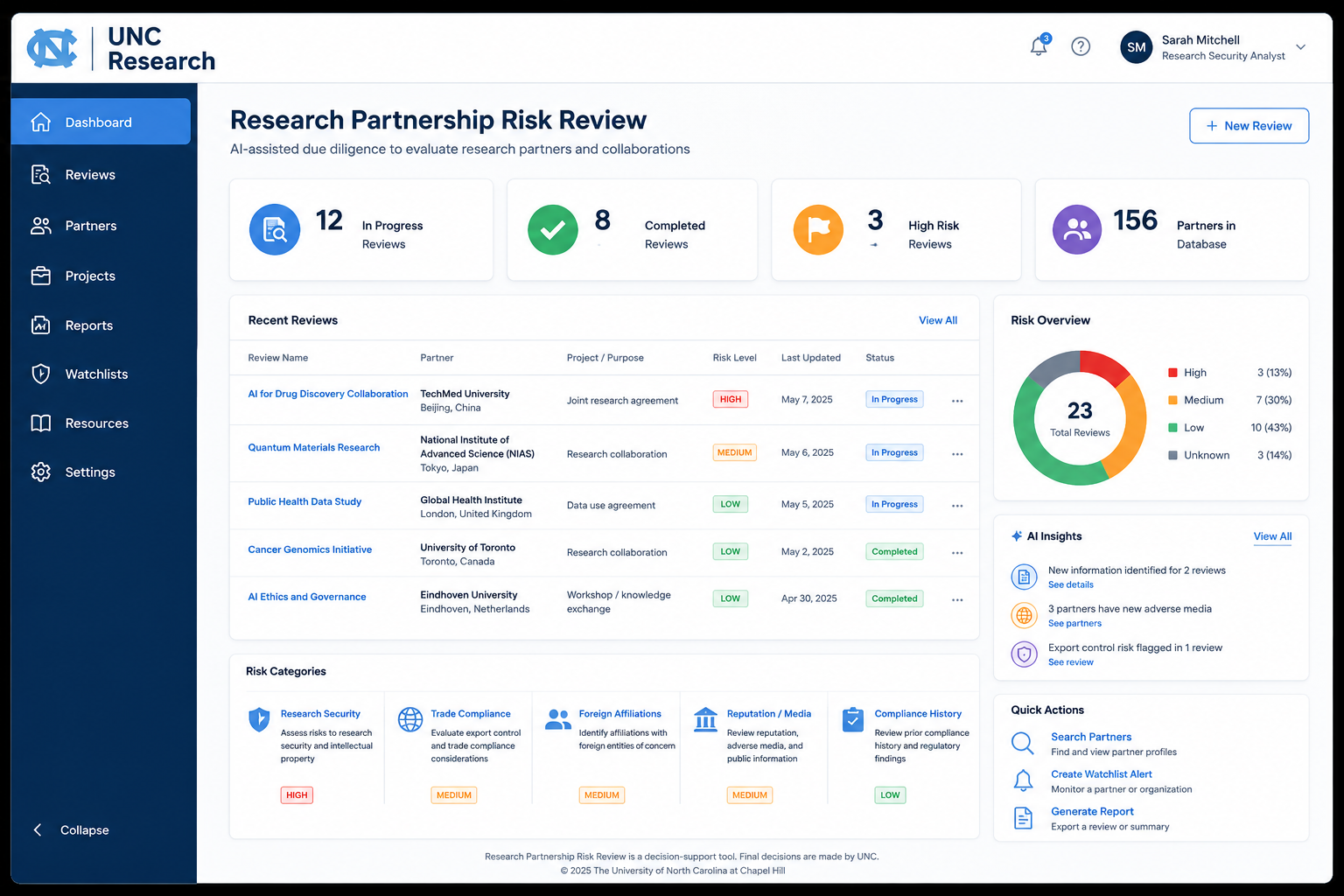
The **Research Partnership Risk Review** would be a web-based application designed to help UNC research security and compliance professionals conduct due diligence on prospective research partners and collaborations. Universities increasingly need to evaluate potential institutional partners, particularly in international research, for issues involving research security, trade compliance, foreign affiliations, restricted parties, reputational concerns, and other institutional risks. Today, much of this work requires staff to search multiple sources, collect information manually, and synthesize findings before determining whether additional review is needed. The proposed application would bring that work into a more structured and consistent workflow.
The primary users would be UNC research security and compliance professionals who review proposed collaborations involving outside universities, research organizations, companies, or other entities. A user would create a review for a prospective partnership and enter basic information about the proposed research project and partner organization. The application would then organize relevant information about the partner, affiliations, location, research activities, and other risk indicators. The goal is to give reviewers one place to see the information associated with a partnership, document their analysis, track outstanding questions, and maintain a record of the review.
The application would include an **AI-assisted component** that helps gather, organize, and summarize information for the reviewer. For example, AI could summarize information retrieved from approved public sources, identify potentially relevant affiliations or risk indicators, and organize findings into categories such as research security, trade compliance, foreign affiliations, sanctions or restricted-party concerns, reputational information, and prior compliance history. The AI would not decide whether UNC should enter into a partnership or automatically approve or reject a collaboration. It would function as a **human-in-the-loop decision-support tool**, with a research security professional reviewing the underlying information, validating findings, adding context, and documenting the final assessment.
The envisioned product is primarily a **responsive web application**, rather than a mobile application, because users are likely to conduct detailed reviews from a desktop or laptop. The interface could include a dashboard showing open and completed reviews, a partner profile, project information, risk categories, supporting sources, AI-generated summaries, reviewer notes, recommended follow-up actions, and review status. The application could also allow users to search previous partner reviews, assign or track follow-up tasks, and generate a summary report documenting the review and its supporting information.
For a COMP 523 project, the initial version would not need to connect to every external or UNC system. The team could develop a functional prototype using a combination of sample data, selected public data sources, and possible one or more APIs that are appropriate for a student project. Potential external information sources could include publicly available sanctions or restricted-party data, organizational websites, government information, and other open-source information. The architecture should allow additional sources to be added later. Future versions could potentially interact with UNC research administration systems or institutional identity and authentication services, but those integrations would not be required for the initial prototype.
A successful project would demonstrate the complete workflow for a partnership review: creating a review, entering project and partner information, retrieving or adding supporting information, using AI to organize and summarize that information, presenting potential risk indicators to a reviewer, recording the reviewer’s analysis, tracking follow-up actions, and producing a documented review summary. Because the tool deals with institutional risk, the design should also emphasize **transparency and traceability**. Users should be able to see where information came from and distinguish source information from AI-generated analysis and human conclusions.
The project provides a strong opportunity for a COMP 523 team to work on a real-world application involving **web development, user-centered interface design, databases, API integration, AI-assisted information processing, workflow management, and responsible AI design**. The end product would serve as a proof of concept for how technology could make research partnership reviews more efficient and consistent while keeping professional judgment and institutional decision-making firmly in the hands of UNC staff.
screenThe broader work from which this project emerges C is a joint endeavor between Dr. Lauren Leve (Associate Professor of Religious Studies and director of the Interdisciplinary major at UNC) and the Nepali heritage organization Baakhan Nyane Waa (“Come Tell Stories” in the Newari language), a group of Nepali cultural heritage professionals based in Kathmandu. Members of Baakhan Nyane Waa are architects, engineers, artists and filmmakers who came together to help reconstruct a major cultural site in Kathmandu that was destroyed in the 2015 earthquake and have expanded their work to other cultural preservation initiatives. Professor Leve is an expert on Himalayan Buddhism and Nepali Buddhist culture. They met in the summer of 2018 when Professor Leve traveled to Nepal to create 3D models of Buddhist temples in the Kathmandu Valley and Dr. Leve offered a free training that several Baakhan Nyane Waa members attended.
This meeting led to a plan to create a publicly accessible internet-based record of tangible and intangible religious heritage in Nepal. Specifically, the project’s desired ultimate outcome is a dynamic webpage/application that hosts a 3D model of the Swayambhu heritage site displayed in a way that allows user to explore and experience the site in a natural way, and a searchable archive of video interviews, videos of rituals, photos, and documents that illustrate the meanings that the temple holds for local Buddhists (and, though to a lesser extent, Hindus) and for international communities, including heritage professionals, Asian and European Buddhists, and diasporic Nepalis.
Professor Leve and her Nepali partners began data collection in 2022, using photogrammetry to begin working on the model while recording video interviews with Buddhist monks, priests, scholars, and other stakeholders and visitors to the site, and also filming ritual practices. Jim Mahaney (title) joined the project in 2022 and has become a core member and co-leader of the project work.
In the last few years, we’ve made significant progress creating the 3D model, but have not been ready to devote full attention to creating the archive. It is now time to double down on this part of the work. Our goal is to produce a user-friendly, visually appealing online archive containing the videos we have collected so far and structured in a way that allows additional material to be added. The interface should show the contents of the archive according to a logical structure and include the standard archival metadata. However, we would also like to offer the possibility to search the content using natural language and/or pre-designated keywords to produce lists of all of interviews or other materials that containing that keyword or phrase. This is a challenge because the interviews are conducted in three different languages—Nepali, Newari/Nepal Bhasa, and English… with Hindi and Mandarin likely to come onboard next year—and there are no written transcripts.
The final product should be compatible with computers, tablets and mobile phones (or develop unique products). We need to be able to add additional video content in the future and our partners should also be able to do this. We are also curious about the possibility of adding social media posts produced by stakeholders that are interesting and informative and worthy of preservation.
A previous COMP 523 team (Fall 2024) began this work and took promising steps toward creating a natural language search process using an AI search engine. But the archive structure is incomplete, and the work is still at an early stage.
Here are links to the hand-off materials they shared: https://swayambhu-archive-dept-swayambhu-stories.apps.cloudapps.unc.edu/ https://tarheels.live/comp523teamm/documentation-guide/
(It appears that the documentation guide is unavailable because it’s been inactive. However, I’m still in touch with one of the team members who worked on this. Hopefully we can get that back up again.)
Here are some example digital archives: https://www.testifyingtothetruth.co.uk/viewer/search/-/PI:*/1/-/-/ https://chgs.elevator.umn.edu/search/s/e500c03c-4063-4ffb-9435-c799f4eaffb7 https://storycorps.org/discover/archive/
General significance of the project: The Swaymambhu stupa (Swayambhu Mahachaitya in Sanskrit)—popularly known as “the monkey temple” is one of the most important Buddhist monuments in the Kathmandu Valley, visited by Buddhists, Hindus, and tourists alike. It is a designated UNESCO Heritage Site.
There is a diversity of myth, knowledge, experience and cultural history embedded in Himalayan traditions and materialized at the site. Hundreds of people visit daily to conduct rituals of various types (thousands during festival periods). It is also a popular place for first dates, hanging out, and creating Instagram and TikToks. However, as this pairing makes clear (adults visit to do rituals, young people to make social media content), cultural traditions that are central to the identities of Himalayan ethnic and religious communities are under threat due to changes in residence, the economy, and lifestyle that have interrupted customary ways of passing this invaluable cultural heritage between generations. The interviews and videos we are collecting will ensure that important stories, knowledge, and practices related to Swayambhu, but that also use the temple as a starting point to share knowledge that transcends the individual site, are preserved and accessible for future generations. The primary caretaker and stakeholder communities linked to this key cultural site have endorsed this work and are actively involved in it.
Together, the 3D model and archive constitute important records of the tangible and intangible heritage of Nepal. They will preserve vital knowledge of both cultural practices and the built Buddhist environment into the future. This is a crucial need given that the Kathmandu Valley is still geologically active with more earthquakes expected and considering the rapid pace of cultural change.
We expect that the site will attract users with a variety of types of interest in Buddhism and/or Nepali culture. UNESCO has expressed interest in promoting our completed product, as has the US Embassy in Kathmandu and the Tourism Ministry of Nepal. Professor Leve will integrate it into the courses on Buddhism she teaches at UNC; she expects it may be appealing to faculty and students at other colleges as well.
https://swayambhu-stories.vercel.app/
This is a link to a presentation created by a student in a previous COMP 523 group who continued the work in an independent study. This student was working on the modeling so the presentation focuses on that. But offers visuals of Swayambhu (including a flyover of the model as it stood in May 2026 ). The archive we're hoping for a team to work on now is the other half of this project.
The UNC Computer Science department manages dozens of courses each semester across a limited set of classrooms. Classroom assignments must take into account course enrollment, room capacity, meeting times, room availability, and occasional last-minute changes. Unfortunately, the information needed to manage these assignments currently lives in multiple systems.
UNC's official classroom scheduling system is 25Live, while the Computer Science department also maintains its own Google Calendars for departmental rooms. These systems do not automatically stay synchronized. As a result, changes to classroom assignments may need to be entered or checked in multiple places, creating extra administrative work and the possibility of inconsistencies.
We would like to develop a software system that helps bridge this gap. One component could synchronize classroom reservations between 25Live and the department's Google Calendars, subject to whatever interfaces and access these systems provide.
A second, more ambitious component would provide an intuitive visual scheduling interface for departmental administrators. For example, an administrator might see courses laid out by day and time alongside available rooms, with room capacities and expected course enrollments visible. Courses could potentially be moved between rooms or times interactively, while the system flags conflicts, rooms that are too small, or other scheduling problems.
The goal is not necessarily to build an automated course scheduler. Rather, it is to create a practical decision-support and synchronization tool that makes the human scheduling process faster, more visual, and less error-prone.
This project offers opportunities to work on calendar and enterprise-system integration, APIs, data synchronization, interactive UI design, constraint checking, and visualization, while solving a real administrative problem faced by the department every semester.
I would like to have a simple chatbot developed helping patrons discover and navigate resources and services in rural libraries. I have had preliminary data collection from those rural libraries completed. This chatbot does not need to be fancy. It serves as proof-of-concept. I will test its relevance and feasibility with rural communities.
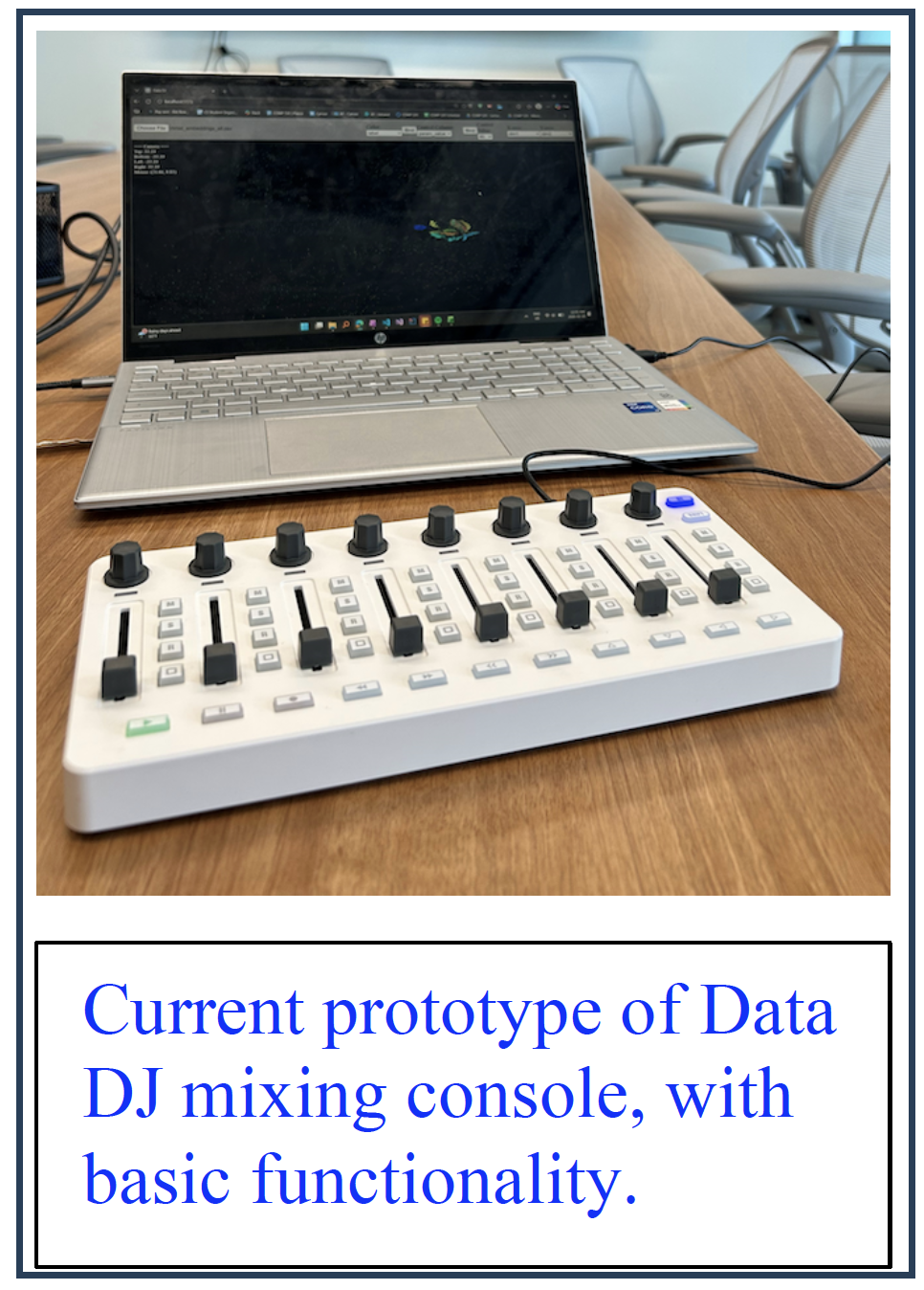
We propose to develop and implement Data DJ, a novel, technology-enabled instructional platform that allows students to interact with high-dimensional data in an intuitive, human-centered way. High-dimensional data has become ubiquitous in biomedical data analysis across the health sciences due to advancements in biotechnology methods such as sequencing across genomics, proteomics, lipidomics, and more. Because of this, dimension-reduction methods such as PCA, UMAP, and tSNE have become crucial parts of analysis pipelines to project down the data into an interpretable 2 or 3D structure. However, due to the stochasticity in these algorithms, the choice of hyperparameter can lead to significant changes in the lower dimensional structure, leading to incorrect biological interpretations. These have crucical downstream impacts, as these visualizations are used for making high-impact health decisions such as clustering cell types or cancer responses. Hence, we propose an interpretable platform, DataDJ, to explore dimension reduction visualizations for high-dimensional data interactively, allowing scientists and clinicans to connect with their data without needing extensive coding and statistical expertise.
The platform combines:
• A custom physical interface (low-cost hardware controller such as DJ
  board or video game controller)
• A web-based software platform accessible via cloud infrastructure to
  back end time-consuming dimension reduction computations
• Alternative interaction modes (keyboard, touchscreen) to ensure
  scalability and accessibility
This system enables students to “manipulate” data in real time—similar to how a DJ mixes music—by adjusting parameters, exploring projections, and dynamically visualizing patterns in complex datasets. We have a working prototype with available code base already, using a DJ board to interact and explore the data. We are looking to refine this prototype, add more use cases, and scale. We are hoping to use this an education tool in multiple undergraduate and graduate classes on campus, in addition to tooling towards data analysis pipelines in research.
prototype imageThis project is a front-end for an optical lens design tool. The backend, LieOptics, is a lightweight Python package we've already built that computes optical aberration coefficients analytically, using Lie group and Hamiltonian methods instead of traditional ray tracing. That approach makes it dramatically faster. It has over 1000x speedup on a simple camera lens in our benchmarks, and it makes principled lens design accessible. Designers can dig into aberration pattern analysis that no other tool offers, giving them real guidance during design instead of the trial-and-error process most lens design still relies on. What's missing is a way to actually see and use any of this. That's why we are looking forward to an front-end.
The backend is still a prototype, but it covers the essential APIs: defining lens systems (radius, thickness, glass index per element), analyzing how rays focus through them, running optimization (e.g., differential evolution over lens parameters) to improve performance, and generating spot diagrams that any optics engineer can read.
Right now, a designer has to write code to run any of these functionalities. The goal of this project is a cross-platform application that lets an end user, such as an optical engineer, researcher, or student, interactively define a multi-element lens system, run aberration analysis and optimization, and visualize the results (spot diagrams, aberration coefficients, phase-space plots) without touching code. We're picturing an Electron or browser-based app with a form/canvas-style UI for building lens systems, talking to the existing Python backend through an API layer, and rendering interactive plots of the results, though we're open to a better framework for bridging the two if one fits better.
The target users are researchers and students in optics who want a lightweight, open-source alternative to commercial tools like Zemax or CODE V for exploratory lens design, with access to performance insights that only our model provides. The team's job is the front-end and a thin API layer connecting to the existing backend. We will provide the backend's core computational code, in a stable state. The team does not need to modify the backend.
I’ve been brainstorming ways to expand the platform. In addition to continuing to develop the web application, I’m especially interested in turning SPFMatch into an app. Some ideas I’ve been exploring include:
  -- A daily skin check-in feature (e.g., “How does your skin feel
     or look today?”) to personalize recommendations over time
  -- A trend tracker that highlights consistency (such as applying
     sunscreen for 10 days straight)
  -- Weekly summaries that reflect habits, UV exposure, and product
     effectiveness
  -- A community platform where users can share sunscreen experiences,
     routines, and tips—especially valuable for people of color who
     are often underrepresented in skincare spaces
  -- Image analysis using the phone camera to help determine or confirm
     skin tone and supplement questionnaire data (face, arm, hand, etc.)
New directions include:
Using AI to try an initial match from skin photos supplied by the user.
Last semester
SPFMatch is a web application designed to help users find the most effective sunscreen for their specific skin tone, skin type, and lifestyle needs. While sunscreen is essential for skin cancer prevention and maintaining healthy skin, many people struggle to choose a product that provides adequate protection while suiting their unique needs. This challenge is especially important for individuals with darker skin tones, who are often underserved in dermatological resources, face marketing bias, and may believe sunscreen is unnecessary for them.
This website will guide users through a short questionnaire covering their skin tone (using a visual scale such as the Fitzpatrick classification), skin type (dry, oily, combination, sensitive), lifestyle factors (daily sun exposure, time spent outdoors, activity level), and preferences (mineral vs. chemical sunscreen, fragrance-free, texture). Based on their responses, SPFMatch will generate tailored sunscreen recommendations drawn from a curated, dermatologist-reviewed product database, backed by research on SPF efficacy and skin safety.
Core features will include:
  -- AI-powered recommendations based on Dermatologists and Research
  -- Sunscreen recommendations tailored to all skin tones
  -- Reapplication reminders based on UV index and user activity
The target audience includes:
  -- Individuals looking for personalized sunscreen recommendations
  -- People of color who lack targeted sun safety recommendations
  -- Health-conscious users seeking evidence-based skincare guidance
Add to this the ability to glean (or confirm) input questionaire data via image analysis of camera image(s) of a user's face and other skin areas (arm, hand, etc.).
sample dataThe project would be around robocalls and stopping them. It would involve developing a process to evaluate filings and mitigation plans. The idea is that you can then identify problematic actors (i.e., sources of robocalls) and deny them access to the US call system via entry intro the RMD database.
FCC Robo Call Mitigation programACCIDDA has been developing the Flexible Epidemic Modeling Pipeline (flepiMoP) for several years, with its origin during the COVID pandemic. Briefly, flepiMoP is intended to be a low-code orchestration tool for conducting a variety of infectious disease modeling analyses (e.g. inference, scenario comparison, forecasting) within a unified command line interface. The tool effectively reduces the complexity of model specification and analysis by providing a simpler language and solving the book-keeping issues associated with this sort of work.
We have several elements of that overarching project that would make for focused projects for CS / CE students. I'm not sure what level of detail to go into here, but we have an active issues list at
github.com/HopkinsIDD/flepimopand the general documentation at
https://www.flepimop.org/I would say roughly there are 3 categories of projects that could be done, which would pull from / build on those issues:
   -- software engineering tasks to do with package / library organization and
      continuous integration
   -- design architecture modularization / plugin system development
   -- particular algorithm implementation / optimization (e.g. work distribution
      and collection for parallelization, different stepper / inference numerics)
Support modules for the simulation modeling pipeline "flepimop2", https://accidda.github.io/flepimop2 (time available, also potentially core pipeline work). This could be several groups, as we have around a dozen modules needing work - plugins for common data types, common post-processing tasks, visualizations, etc. See https://github.com/ACCIDDA/flepimop2-extras
We have a benchtop project that estimates measles vaccine coverage from school enrollment data, and then presents that data as a dashboard:
https://accidda.github.io/measles/The estimation package (still in beta) is also available:
https://github.com/ACCIDDA/imugap
There are several opportunities for work here:
  -- backend ETL work on the data curation, validation, combination,
     etc, etc which combines several interesting data streams (all
     currently public, some opportunity to expand to incorporating some
     restricted sources) - this would be a data engineering project
  -- front-end work on the dashboard to make it more interactive,
     present more results, improve responsiveness, etc, etc - this would
     be web/mobile-enabled web application project
  -- scientific work on the statistical / inference package - this would
     be a data science project, focused narrowly on the
     statistical analysis
  -- generalization to cover other states - this would be a data science
     project, focused broadly on applying an analysis across many settings
All of these areas have *something* in place, but all of them could also independently pursued (and all reinforce each other).
Work supporting a national measles dashboard,
https://accidda.github.io/measles-dashboard - two projects here:
engineering around the dashboard (e.g. some mix of evolution of the
product itself, work to build a decentralized infrastructure design),
and work on the data preparation support package
(https://github.com/ACCIDDA/tidyschoolvax - currently private, but
working on getting that switched)
Spring project
Details follow.
Detail DocProject details follow.
Detail DocProject details follow.
Detail DocThis may be over-ambitious and too loosely defined, but would be happy to develop it with a COMP 523 team. It involves developing an environment, perhaps similar to the writing and collaborating environments I was working on back in the 90s. I would want it developed using an i agentic architecture and vibe programming. If this interests at all, you can get a glimpse at what i am talking about at
https://www.chicorylane.com/musings/musingsWelcome.htmlespecially the essay on human-ai collaboration as well as the prompt-response transcript at the link at the end of the page.